Legal

© CryoSave South Africa (Pty) Ltd
All rights reserved

Stem Cell Innovations in Heart Disease

In adults, evidence from randomized controlled trials has matured. A 2024 systematic review and meta-analysis pooling 17 randomized MSC trials demonstrated significant improvements in left ventricular ejection fraction (LVEF), ventricular volumes, and functional capacity, with no new safety concerns. However, heterogeneity in cell source, dosing, and delivery route limits universal conclusions [2].

The strongest signals appear when patient selection is refined. In the DREAM-HF trial, the largest sham-controlled MSC study to date, allogeneic mesenchymal precursor cells were delivered transendocardially. A post-hoc analysis reported in 2024 showed reduced major adverse cardiovascular events (MACE) over ≈30 months in ischaemic HFrEF patients with systemic inflammation (hsCRP ≥2 mg/L), supporting an anti-inflammatory mechanism [3]. These findings are clinically meaningful but require prospective validation in inflammation-selected populations before they inform practice.

Among perinatal sources, umbilical cord–derived MSCs (UC-MSCs), particularly from Wharton’s jelly, are especially promising due to their ready availability, low immunogenicity, and potent secretome. In the RIMECARD trial, a phase 1/2 randomized study, a single intravenous dose of UC-MSCs improved both LVEF and quality of life in patients with chronic heart failure [4]. A 2023 meta-analysis of UC-MSCs in cardiac disease reinforced safety and showed efficacy signals but stressed the need for standardized protocols and larger phase 2/3 trials [5]. Current research now explores multi-dose regimens; a U.S. clinical program is testing repeated infusions in chronic HF, marking the transition of UC-MSC therapy from exploratory to structured late-phase evaluation [6].

Cord blood–derived cells have been explored mainly in acute myocardial infarction and cardiomyopathies. Early-phase studies (e.g., NCT04056819) are evaluating intracoronary and intravenous delivery, but the evidence base is smaller and less mature compared to UC-MSCs [7].

The frontier of engineered heart muscle (EHM) derived from pluripotent stem cells has delivered a breakthrough. A 2025 Nature report documented large-scale myocardial remuscularization in primates and the first-in-human compassionate-use case within the BioVAT-HF program, without fatal arrhythmias and with rigorous molecular confirmation of safety [8]. While still experimental and requiring surgical delivery with immunosuppression, EHM represents the clearest step yet toward true myocardial replacement.

Another parallel innovation is extracellular vesicles (EVs), or exosomes, derived from MSCs. Between 2023 and 2025, multiple reviews and preclinical studies confirmed their anti-inflammatory and pro-angiogenic benefits, with novel delivery strategies such as hydrogels and patches improving local retention [9]. EV-based therapies are now entering first-in-human cardiovascular applications, potentially offering a scalable, cell-free alternative.

Paediatric Clinical Trials

In children, particularly those with congenital heart defects such as Hypoplastic Left Heart Syndrome (HLHS), regenerative approaches are being studied alongside surgical palliation. Currently, at least six clinical trials (Phase I–III) are investigating cord blood or MSC-based interventions in paediatric heart disease:

  • Phase I trials: Autologous cord blood mononuclear cell (UCB-MNC) injections during Stage II repair in HLHS (safety and feasibility focus).
  • Phase II trials: The Mayo Clinic’s AutoCell-II program, assessing intramyocardial UCB-MNCs during Glenn repair, and the ELPIS trial, testing donor MSCs during Glenn/Fontan surgery.
  • Phase III trial: The APOLLON study, evaluating intracoronary cardiac stem cells during Stage II/III surgeries.

In addition, a systematic review identified 12 completed Phase I–II neonatal cell therapy trials (across cardiac, pulmonary, and neurological diseases) and 24 registered ongoing studies, with three specifically targeting congenital heart disease. Collectively, these studies demonstrate that paediatric regenerative cardiology is still in early-to-mid clinical stages but is steadily progressing from safety and feasibility (Phase I) toward efficacy testing (Phase II/III).

Conclusion

The clinical landscape underscores three key themes:

  1. Adult HF: MSC therapy shows reproducible benefit in inflammation-enriched ischaemic populations, but late-phase confirmatory trials are essential.
  2. Cord-derived therapies: UC-MSCs are the most advanced perinatal product in HF, with multiple trials now testing repeated dosing; cord blood–derived therapies remain earlier in development.
  3. Paediatrics: Early-phase HLHS and congenital heart disease trials highlight the potential of cord blood and tissue stem cells in one of the most sensitive populations, with at least six trials across phases I–III already active.

Stem cell therapy for heart disease remains investigational, but both adult and paediatric studies show real momentum. With growing trial numbers and innovations in engineered tissues and EVs, regenerative cardiology is steadily moving toward clinical translation.

Stem Cell Therapy in Reproductive Health

  1. Endometrial Regeneration
    A thin endometrium can hinder embryo implantation, leading to infertility. Recent studies have demonstrated that MSCs can enhance endometrial thickness and receptivity, improving pregnancy outcomes. This regenerative approach offers hope for women with refractory endometrial conditions (Journal of Nanobiotechnology, 2025).
  2. Ovarian Rejuvenation
    Innovative therapies involving the injection of stem cells into the ovaries aim to stimulate folliculogenesis and restore ovarian function. Such approaches are being investigated to address diminished ovarian reserve and age-related fertility decline (Adore Fertility, 2025).
  3. In Vitro Gametogenesis (IVG)
    IVG involves generating gametes from pluripotent stem cells. Recent breakthroughs have enabled the creation of human oocytes from skin cells, offering potential fertility solutions for individuals unable to produce viable eggs, including same-sex couples and women with ovarian failure (New York Post, 2024).

Advancements in Male Reproductive Health

  1. Spermatogonial Stem Cell (SSC) Transplantation
    SSC transplantation has been explored as a method to restore spermatogenesis in men rendered infertile due to chemotherapy or other gonadotoxic treatments. A landmark case involved the transplantation of cryopreserved testicular tissue back into a patient, marking a significant step toward fertility restoration in male cancer survivors (Wired, 2025).
  2. MSC Therapy for Testicular Dysfunction
    MSCs have been investigated for their ability to regenerate damaged testicular tissue and improve spermatogenesis. Clinical studies suggest that MSC therapy can enhance sperm count and motility in men with conditions like azoospermia and oligospermia (Swiss Medica, 2025).
  3. Exosome-Based Therapies
    Exosomes derived from stem cells carry bioactive molecules that can modulate the testicular microenvironment. These vesicles have shown promise in promoting germ cell development and protecting against oxidative stress-induced damage, offering a novel avenue for treating male infertility (Frontiers in Cell and Developmental Biology, 2023).

Regulatory and Ethical Considerations

As stem cell therapies advance, regulatory frameworks are evolving to ensure patient safety and ethical compliance. The U.S. Food and Drug Administration (FDA) has increased oversight of stem cell clinics, emphasizing the need for rigorous clinical trials and evidence-based practices in reproductive applications (Center for Human Reproduction, 2025).

Conclusion

Stem cell therapy represents a frontier in reproductive medicine, offering innovative solutions for infertility and reproductive disorders in both sexes. Ongoing research and clinical trials continue to refine these therapies, with the potential to significantly impact reproductive health outcomes. As the field progresses, interdisciplinary collaboration and stringent regulatory oversight will be essential to translate these promising therapies from bench to bedside.

Innovative Stem Cell and Immunotherapy Approaches in Cervical Cancer Treatment

Conventional and Targeted Treatments: Limitations and Challenges

Standard treatment for early-stage cervical cancer includes radical hysterectomy or a combination of radiation therapy (RT) and chemotherapy. In metastatic cases, targeted therapies such as monoclonal antibodies and angiogenesis inhibitors have been explored. Unfortunately, these therapies have achieved only limited success. For example, although epidermal growth factor receptor (EGFR) is frequently overexpressed in cervical cancer and associated with poor outcomes, EGFR-targeting monoclonal antibodies like cetuximab have shown modest efficacy, especially as monotherapy.

Immunotherapy strategies, including therapeutic vaccines targeting HPV oncoproteins E6 and E7, have also shown limited clinical benefit due to immune evasion mechanisms like HLA downregulation. As a result, there is a growing interest in leveraging natural killer (NK) cells, which can recognize and kill cancer cells independently of HLA presentation.

The Promise of NK Cell-Based Therapy in Cervical Cancer

NK cells, central players in the innate immune system, possess a unique ability to identify and destroy tumour and virus-infected cells without prior sensitization. They operate through a finely tuned balance between activating (e.g., NKG2D, NKp30, NKp46) and inhibitory (e.g., NKG2A) receptors. Upon activation, NK cells secrete cytotoxic granules containing perforin and granzyme B, and produce cytokines such as IFN-γ and TNF-α, contributing to immune activation and tumour cell apoptosis.

Innovative therapies are focusing on NK cell-based immunotherapy, particularly using cells derived from umbilical cord blood (UCB), which is a non-invasive, readily available source. UCB-derived NK cells are appealing due to their allogeneic compatibility and potential as “off-the-shelf” products. However, their low initial numbers and immature functional state necessitate ex vivo expansion techniques to enhance their clinical utility.

Cytokine cocktails—such as IL-2, IL-15, IL-12, and IL-18—combined with artificial antigen-presenting cells have significantly improved NK cell yield and cytotoxic potential. Notably, UCB-derived CD34+ progenitor NK cells exhibit superior anti-tumour activity compared to peripheral blood-derived NK cells, especially against HLAdeficient tumour cells like cervical cancer.

Emerging Strategies: Genetic Modification and CAR-NK Cell Therapy

Advances in genetic engineering have enabled the development of chimeric antigen receptor (CAR) – modified NK cells. CARs targeting tumour-associated antigens like CD19 have shown success in hematologic malignancies and are now being adapted for solid tumours, including cervical cancer. UCB-derived NK cells engineered with CAR constructs (e.g., NKG2D-DAP10-CD3ζ) demonstrate enhanced tumour cytotoxicity in preclinical models.

Inhibitory checkpoint modulation is another promising strategy. UCB-derived NK cells typically express higher levels of NKG2A, a receptor that suppresses NK cell activity. Blocking NKG2A with monoclonal antibodies or using CAR constructs to override this inhibition could significantly enhance the therapeutic efficacy of NK cell-based treatments in cervical cancer.

MSC-Based Approaches: Tumour Homing and Exosome Therapy

Mesenchymal stem cells (MSCs), particularly those derived from the umbilical cord (UCMSCs), have emerged as potent anti-cancer agents. Owing to their innate tumour-homing capabilities, MSCs can be engineered to deliver therapeutic payloads directly to tumour sites, minimizing systemic toxicity.

Recent studies have shown that UCMSC-derived exosomes, particularly those containing miR-15a-5p, can inhibit epithelial-to-mesenchymal transition (EMT) and suppress metastasis in cervical cancer models. Additionally, conditioned medium and cellular extracts from UCMSCs have demonstrated anti-proliferative and pro-apoptotic effects on cervical cancer cell lines such as HeLa.

Furthermore, innovations in biocompatible nanocarriers are being explored to deliver MSC-engineered therapies and exosomal cargoes more effectively to tumours. Clinical trials are now examining UCMSCs both as therapeutic agents and as vectors for targeted anti-cancer gene delivery.

New Innovations in Stem Cell and NK-Based Research Since 2023

Since 2023, key advancements include:

  • CAR-NK cells targeting HPV antigens: Novel CAR constructs specific to HPV oncoproteins E6/E7 are being tested, showing selective cytotoxicity in cervical cancer models.
  • iPSC-derived NK cells: Induced pluripotent stem cell (iPSC)-derived NK cells offer scalable, renewable NK cell sources with customizable receptor expression, including CARs, for personalized therapies.
  • Organoid and 3D-bioprinted tumour models: These systems are now being used to evaluate stem cell therapies in a patient-specific manner, increasing translational relevance and optimizing therapeutic dosing.
  • Exosome engineering: Recent progress in loading exosomes with therapeutic microRNAs, small interfering RNAs (siRNAs), and immune modulators is expanding the application of UCMSC-derived vesicles in oncology.
  • Checkpoint blockade with NK cells: Studies are investigating combination therapies of UCB-NK cells with checkpoint inhibitors like anti-NKG2A or anti-PD-L1 for enhanced tumour killing in cervical cancer.

Recent advances in stem cell research have opened promising avenues for the treatment of cervical cancer, particularly through the use of mesenchymal stem cells (MSCs), extracellular vesicles, and engineered immune cell therapies.

  1. Umbilical Cord Mesenchymal Stem Cell-Derived Extracellular Vesicles (hUCMSC-EVs)
    Recent studies have highlighted the tumor-suppressive effects of extracellular vesicles (EVs) derived from human umbilical cord mesenchymal stem cells (hUCMSCs). These EVs, particularly small extracellular vesicles (sEVs), have been shown to carry microRNAs like miR-370-3p, which directly target and downregulate oncogenes such as DHCR24, thereby inhibiting the development of cervical precancerous lesions. Additionally, another study demonstrated that hUCMSC-derived sEVs can suppress inflammation and modulate the tumor microenvironment to reduce the risk of cervical cancer progression
  2. Chimeric Antigen Receptor (CAR) NK Cell Therapy
    Engineering natural killer (NK) cells with chimeric antigen receptors (CARs) represents a significant innovation in immunotherapy. A 2024 study reported the successful generation of CAR-NK cells targeting mesothelin, a protein commonly overexpressed in cervical cancer. These CAR-NK cells demonstrated potent cytotoxicity against cervical cancer cells in both 2D and 3D models. When combined with chemotherapeutic agents such as cisplatin, the therapeutic effect was significantly enhanced compared to monotherapy.
  3. iPSC-Derived Rejuvenated Cytotoxic T Lymphocytes
    Induced pluripotent stem cells (iPSCs) have been employed to generate rejuvenated cytotoxic T lymphocytes (rejTs) specifically engineered to target HPV-related antigens such as E6 and E7, which are expressed in cervical cancer cells. These rejTs provide a personalized and robust immune response, potentially overcoming the limitations of traditional T-cell therapies which are often impeded by HLA downregulation in cervical tumors. The development of this technology marks a significant step forward in adoptive cellular immunotherapy for HPV-induced cervical cancers (News-Medical.net, 2024, https://www.news-medical.net/news/20240305/Scientists-develop-robust-iPSC-derived-rejuvenated-T-lymphocytes-for-cervical-cancer-treatment.aspx).
  4. Microbiome Influence on Cervical Stem Cells
    A novel study published in Nature Communications (2025) explored how metabolites from cervical microbiota can influence cervical stem cell biology. The researchers found that D-lactic acid, a byproduct of Lactobacillus metabolism, suppresses the proliferation of cervical organoids—including both normal and precancerous cells—by modulating PI3K-AKT and YAP1 signaling pathways. This finding suggests that manipulating the microbiome could serve as a preventive strategy against cervical cancer by targeting early stem cell transformation.
  5. Engineered Mesenchymal Stem Cells for Targeted Cancer Therapy
    MSCs have been increasingly engineered to act as delivery vehicles for anti-cancer agents, leveraging their natural tumor-homing abilities. These modified MSCs have been loaded with pro-apoptotic proteins, chemotherapeutic agents, and even oncolytic viruses to enhance therapeutic specificity and reduce systemic toxicity. A 2025 review highlights their utility in delivering targeted therapies directly to cervical tumors, offering both localized treatment and a reduction in metastasis.
    In summary, stem cell-based therapies, including hUCMSC-derived EVs, CAR-NK cells, iPSC-rejuvenated T cells, microbiome-stem cell interactions, and genetically modified MSCs, are rapidly evolving into powerful tools for treating cervical cancer. These emerging technologies provide a foundation for future therapies that may overcome the limitations of conventional treatment and improve outcomes for patients globally.

Conclusion

Stem cell-based and NK cell-based immunotherapies offer transformative potential in the fight against cervical cancer. UCB-derived NK cells, particularly when genetically engineered, have shown strong preclinical efficacy and are progressing toward clinical translation. In parallel, UCMSCs and their exosomes present a multifaceted therapeutic platform that can inhibit tumour progression and enhance immune responses. As research continues to refine expansion protocols, delivery systems, and genetic modification strategies, these cell-based therapies are poised to become central components of future cervical cancer treatment.

Innovative Immunotherapeutic and Stem Cell-Based Approaches for Ovarian Cancer Treatment

Emerging Role of Immunotherapy

Immunotherapy, which harnesses the patient’s immune system to recognize and destroy cancer cells, has revolutionized the treatment landscape for several malignancies. However, its success in ovarian cancer has been limited, likely due to the immunosuppressive tumour microenvironment (TME). Active investigations are exploring immune checkpoint inhibitors (ICIs), cancer vaccines, and adoptive cell therapy (ACT) to overcome this resistance.

Neutrophils and Natural Killer (NK) Cells in the Tumour Microenvironment

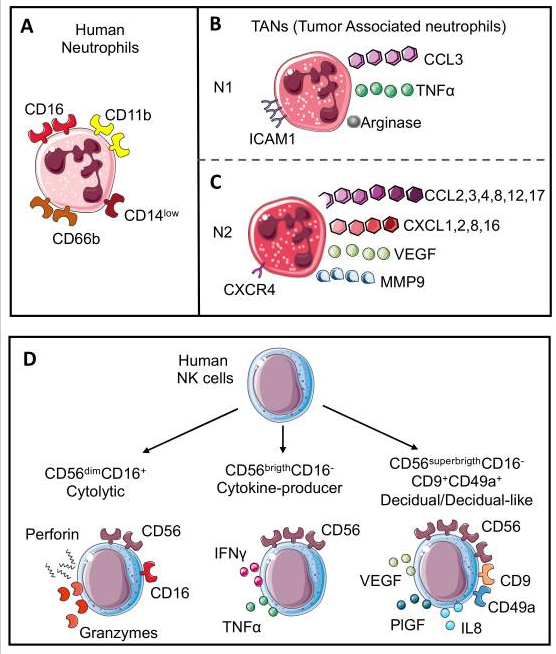
Fig 1. Neutrophil and NK cell subsets

Neutrophils and NK cells, integral components of innate immunity, play a dual role in cancer. Neutrophils constitute 50–70% of circulating leukocytes and are capable of adopting pro-tumour (N2) or anti-tumour (N1) phenotypes, modulated by TME signals. N1 neutrophils express TNF-α, CCL3, and ICAM1, exerting cytotoxic effects, while N2 neutrophils promote tumorigenesis through secretion of VEGF, MMP9, and immunosuppressive cytokines.

Similarly, NK cells are subdivided into cytotoxic CD56dimCD16+ cells and cytokine-producing CD56brightCD16− cells. Their cytotoxic activity is regulated by the balance of activating and inhibitory receptor signaling, particularly in response to downregulated MHC I expression on tumour cells. Decidual-like NK cells within TME exhibit pro-angiogenic properties, complicating their role in tumour suppression.

Neutrophil – NK Cell Crosstalk

The interplay between neutrophils and NK cells further complicates immunotherapy. Neutrophils can suppress NK function by reducing CCR1 expression or modulating NKp46 via reactive oxygen species (ROS), elastase, and cathepsin G. Conversely, NK-derived IFNγ can reverse the pro-angiogenic phenotype of tumour-associated neutrophils (TANs), highlighting a potential avenue for therapeutic modulation (Palano et al., 2021).

Adoptive Cell Therapy Using UCB – Derived Immune Cells

Cord blood-derived neutrophils and NK cells represent promising tools for ACT. For instance, lipopolysaccharide (LPS) and IL-8 activated neutrophils from umbilical cord blood (UCB) significantly inhibited ovarian cancer progression in vitro and in vivo (Liu et al., 2020). UCB-derived NK cells expanded with SR1, IL-15, and IL-12 demonstrated potent intraperitoneal cytotoxicity against ovarian cancer spheroids in xenograft models (Hoogstad-van Evert et al., 2017).

Mesenchymal Stem Cells and Their Secretome

Mesenchymal stem cells (MSCs), owing to their immunomodulatory properties and tumour-homing capabilities, are being investigated for both anti-cancer therapy and preservation of fertility postchemotherapy. The therapeutic effects of MSCs are largely mediated through paracrine signaling via their secretome, which includes cytokines, growth factors, lipids, mRNAs, and miRNAs.

Conditioned medium (CM) derived from MSCs offers advantages such as easier storage and reduced immunogenicity, without the risk of malignant transformation. CM from human amniotic epithelial cells and hUCMSCs has been shown to reduce ovarian damage, restore follicular reserve, and protect against cisplatin-induced toxicity (Shareghi-Oskoue et al., 2021; ArefNezhad et al., 2023).

Clinical Implications and Future Directions

Stem cell-based therapies, including the use of hUCMSC-secreted IL-21 or preconditioned CM, have shown efficacy in animal models of ovarian cancer and chemotherapy-induced ovarian insufficiency. Furthermore, MSC-derived exosomes loaded with anti-cancer agents are under investigation as smart drug delivery platforms.

Despite these advancements, challenges remain in optimizing the source, scale-up, and functional stability of MSC-derived therapies. Clinical trials evaluating MSC and CM-based interventions, in conjunction with immunotherapies such as NK cell infusions or ICIs, could pave the way for breakthrough treatments. Since 2023, significant advancements have been made in stem cell research related to ovarian cancer, focusing on understanding cancer stem cells (CSCs), developing targeted therapies, and improving early detection methods.

Understanding Cancer Stem Cells in Ovarian Cancer

Cancer stem cells are a subpopulation of tumour cells that contribute to tumour growth, metastasis, and resistance to chemotherapy. Recent studies have emphasized the importance of targeting these cells to improve treatment outcomes:

  • Signaling Pathways and Markers: Research has identified key signaling pathways, such as JAK/STAT and Hedgehog, that regulate ovarian cancer stem cell properties. Understanding these pathways can aid in developing targeted therapies .
  • Therapeutic Targets: A study highlighted the role of the CD55 protein in promoting chemoresistance and aggressive cancer stem cell growth in ovarian cancer. Targeting CD55 may offer a new approach to treat chemotherapy-resistant ovarian cancer.

Innovative Stem Cell-Based Therapies

Emerging therapies are leveraging stem cells to deliver treatments directly to ovarian tumours:

  • Neural Stem Cells and Oncolytic Viruses: Researchers are exploring the use of neural stem cells to deliver oncolytic viruses directly to abdominal ovarian tumour sites. This approach aims to infect and kill tumour cells, including those resistant to chemotherapy, and stimulate the patient’s immune system to fight the cancer .
  • CAR-NK Cell Therapy: Advancements in immunotherapy include engineering natural killer (NK) cells with chimeric antigen receptors (CARs) to target ovarian cancer cells more effectively. These CARNK cells are designed to be more aggressive in killing tumour cells and are being considered for direct delivery into the pelvic cavity where ovarian cancer is located.

Early Detection and Prevention Strategies

Understanding the origins of ovarian cancer is crucial for early detection:

  • High-Risk Mesenchymal Stem Cells (MSCs): A recent study identified a subgroup of mesenchymal stem cells that may play a critical role in the formation of precancerous lesions in the fallopian tubes, which can lead to high-grade serous ovarian cancer. These findings could lead to new methods for early detection or prevention of the disease.

These developments represent promising steps toward more effective and personalized treatments for ovarian cancer, particularly in overcoming chemoresistance and improving early detection.

Conclusion

Ovarian cancer, though resistant to current immunotherapeutic modalities, displays immunogenic features that can be exploited using neutrophil and NK cell-based ACT, as well as MSC-derived regenerative therapies. Harnessing the immune system and stem cell biology in a synergistic manner could transform the therapeutic landscape for this deadly disease.

Emerging Stem Cell Therapies Beyond Adipose Tissue

While adipose tissue remains the most commonly used autologous source of mesenchymal stem cells (MSCs), significant innovation is occurring in non-adipose stem cell therapies, including those derived from:

  • Umbilical cord
  • Bone marrow
  • Dental pulp
  • Induced pluripotent stem cells (iPSCs)

1. Umbilical Cord-Derived Mesenchymal Stem Cells (UC-MSCs)

Advantages:

  • Non-invasive collection post-birth
  • High proliferative rate
  • Low immunogenicity (suitable for allogeneic use)

Mechanisms of Action:

UC-MSCs exert anti-aging effects through secretion of extracellular vesicles, cytokines (e.g., EGF, TGF-ꞵ, IL-10), and matrix metalloproteinase inhibitors, which promote fibroblast activation, dermal thickening, and improved vascularization.

Applications:

Skin rejuvenation via topical or microinjection delivery
Use in combination with microneedling and fractional lasers
Improving wound healing and post-surgical recovery

Reference: Kim WS, et al. Wound healing effect of human umbilical cord blood-derived mesenchymal stem cells in diabetic patients with foot ulcers. Stem Cell Res Ther. 2013.

2. Bone Marrow-Derived MSCs (BM-MSCs)

Features:

  • Historically the first source of MSCs studied
  • Exhibit potent immunomodulatory and angiogenic properties

Limitations:

  • Invasive harvesting
  • Lower yield compared to UC-MSCs or ADSCs

Innovations:

BM-MSCs are now being used in growth factor-enriched skin creams, platelet-rich plasma (PRP) combinations, and even cell-free therapy using conditioned media.

Reference: El-Domyati M, et al. Stem cell-conditioned media for skin rejuvenation: clinical and histological study. J Cosmet Dermatol. 2019.

3. Dental Pulp Stem Cells (DPSCs)

Origin: Harvested from extracted deciduous (baby) teeth or third molars

Unique Properties:

  • Neural crest origin, similar to facial tissue embryology
  • High secretion of neurotrophic and growth factors
  • Better regenerative compatibility with orofacial structures

Cosmetic Use:

  • Regeneration of facial soft tissue
  • Healing enhancement for facial scars and post-acne depressions
  • Ongoing trials for topical applications in anti-aging skincare

Reference: Arthur A, et al. The therapeutic effect of human adult dental pulp stem cells on facial soft tissue injuries. Biomaterials. 2008.

4. Induced Pluripotent Stem Cells (iPSCs)

Breakthroughs: iPSCs are generated by reprogramming somatic cells (e.g., skin fibroblasts) into a pluripotent state, mimicking embryonic stem cells without ethical concerns.

Advantages:

Infinite proliferative potential
Customisable for autologous therapies
Can differentiate into dermal fibroblasts, melanocytes, keratinocytes

Innovations:

iPSC-derived exosomes used in clinical trials for skin brightening and anti-aging
Organoid culture models for skin regeneration
Engineered iPSCs for melanin regulation and collagen enhancement

Reference: Jeon YJ, et al. iPSC-derived mesenchymal stem cells and their exosomes promote wound healing in aging skin. Stem Cell Reports. 2021.

Mechanisms of Action in Skin Rejuvenation Using Non-Adipose Stem Cells

The regenerative effects of mesenchymal stem cells (MSCs) and pluripotent stem cells in facial rejuvenation are primarily driven by paracrine signaling and trophic support, rather than direct cell replacement. Key mechanisms include:

1. Paracrine Signaling and Secretome Release

Stem cells release a variety of bioactive molecules known as the secretome, which includes:

  • Growth factors: EGF (epidermal growth factor), FGF (fibroblast growth factor), VEGF (vascular endothelial growth factor), and TGF-ꞵ (transforming growth factor-beta) to promote fibroblast activation and collagen synthesis.
  • Cytokines: IL-10, IL-6, and HGF (hepatocyte growth factor), which modulate inflammation and accelerate tissue repair.
  • Anti-oxidative enzymes: Protect against reactive oxygen species (ROS), which accelerate skin aging.

2. Exosome and Extracellular Vesicle (EV) Transfer

  • Exosomes derived from UC-MSCs, BM-MSCs, and iPSCs deliver microRNAs, mRNAs, and proteins to recipient skin cells.
  • This influences cell proliferation, angiogenesis, melanin synthesis, and matrix remodeling.

3. ECM Remodeling and Fibroblast Rejuvenation

  • MSCs downregulate matrix metalloproteinases (MMPs) that degrade collagen.
  • Simultaneously, they upregulate collagen types I and III, elastin, and hyaluronic acid production.

4. Immunomodulation

  • MSCs modulate local immune responses by suppressing Th1/Th17 inflammation and activating regulatory T-cells (Tregs), reducing skin inflammation and promoting healing.

Delivery Methods for Non-Adipose Stem Cell-Based Therapies

Each delivery method has its benefits and risks depending on the formulation (live cells vs. secretome/exosomes), the stem cell source, and the patient’s condition.

1. Topical Application (Primarily Exosomes/Secretome)

  • Used in combination with ablative lasers, microneedling, or chemical peels.
  • Enhances penetration through transient skin barrier disruption.

Advantages:

  • Non-invasive
  • Easy to integrate into clinical workflows
  • Low risk of immunogenicity

Risks:

  • Limited penetration without adjunctive procedures
  • Unclear dosing/standardization of bioactive components
  • Contamination risk if not produced under GMP

2. Microneedling-Assisted Delivery

  • Microneedling creates microchannels that allow stem cell-conditioned media or exosomes to penetrate into the dermis.

Advantages:

  • Minimally invasive
  • Stimulates endogenous collagen production synergistically
  • Enhances delivery efficacy

Risks:

  • Infection if aseptic technique is not followed
  • Hyperpigmentation or scarring in patients with sensitive skin
  • Inflammation with off-label or poorly characterized products

3. Intradermal Injections

  • Direct injection of UC-MSCs, BM-MSCs, or their derivatives into facial dermis.

Advantages:

  • Targeted delivery to aging or damaged areas
  • Immediate deposition at intended depth

Risks:

  • Immune reaction or graft-versus-host response (especially with allogeneic cells)
  • Nodules or granulomas from cell clustering
  • Vascular occlusion if injected intravascularly (rare but serious)

4. Cell-Free Injectable Formulations (Exosomes/Secretome)

  • Exosomes are encapsulated in hyaluronic acid or other carriers and injected similarly to dermal fillers.

Advantages:

  • Reduced regulatory hurdles compared to live cells
  • Easier to store and standardize

Risks:

  • Still unregulated in many jurisdictions (risk of counterfeit products)
  • Potential for unknown immunologic effects
  • Difficulty in quality control (batch-to-batch variability)

5. Biodegradable Scaffolds or Hydrogels

  • Stem cells or exosomes are embedded in biocompatible matrices and applied to facial wounds or post procedure sites.

Advantages:

  • Controlled, sustained release of factors
  • Structural support for tissue regeneration

Risks:

  • Potential for allergic or foreign body reactions
  • Material breakdown could affect local pH or tissue healing

Emerging and Experimental Delivery Innovations

  • Exosome-liposome hybrids for enhanced stability and targeted delivery
  • Smart microneedle patches loaded with iPSC-derived factors for personalized skin care
  • 3D bioprinted skin grafts using stem cells for scar revision or facial reconstruction

Safety Considerations and Regulatory Concerns

  • Source Integrity:
    • Allogeneic sources (e.g., UC-MSCs) must be screened for infectious diseases.
    • iPSCs pose a theoretical tumorigenic risk if undifferentiated cells remain.
  • Product Purity:
    • Contaminants, endotoxins, or residual reprogramming vectors (in iPSC products) may provoke immune responses.
  • Standardization and Dosing:
    • No consensus exists for optimal concentration or dosing schedules for exosome therapies.
  • Regulatory Status:
    • Many stem cell therapies marketed as cosmetics evade FDA/EMA oversight but may not be safe or effective.
    • Professionals should only use GMP-manufactured, validated products.

Conclusion

The future of facial rejuvenation lies in regenerative, biologically active therapies that target the root cause of aging at the cellular level. Non-adipose sources of stem cells—such as UC-MSCs, BM-MSCs, DPSCs, and iPSCs—offer unique regenerative profiles and are being translated into clinical-grade interventions for skin revitalization.

As these technologies advance from experimental to standardized, they hold the potential to transform aesthetic practice—shifting it from cosmetic correction to true biological regeneration.

Stem Cell Therapeutics and Innovations in the Treatment of Preeclampsia

Emerging Insights into Pathogenesis and Early Detection

While traditional biomarkers such as soluble fms-like tyrosine kinase-1 (sFlt-1) and placental growth factor (PlGF) are in clinical use to predict preterm PE, their utility for term PE remains limited. New multi-organ and multi-omic biomarker discovery platforms—including proteomics, single-cell RNA sequencing, and metabolomics—are uncovering candidate molecules from the placenta, maternal vasculature, immune system, and urine that may enhance early risk stratification.

Moreover, the integration of artificial intelligence and machine learning into early pregnancy screening is revolutionizing predictive modelling. Recent efforts have focused on combining these data streams into dynamic, gestation-adjusted algorithms to improve both sensitivity and specificity for disease prediction.

Fetal Microchimerism (FMc): A Double-Edged Sword

Fetal microchimerism (FMc), the presence of fetal cells within maternal tissues, has been implicated in both tissue repair and autoimmune dysregulation. In PE, altered patterns of FMc—especially the reduced presence of maternal microchimeric cells—are suspected to contribute to immunologic imbalance.

A pivotal 2023 study from the University of Washington reported increased FMc in maternal B cells and NK cell populations in PE cases. Although no significant differences were found in stem cell populations, these findings underscore the possibility that FMc could act as a biomarker or even a therapeutic vector in immune modulation.

Furthermore, the role of uterine natural killer (uNK) cells, particularly a subset that secretes growth factors such as pleiotrophin and osteoglycin, is gaining attention. Their depletion in patients with recurrent pregnancy loss suggests that reconstitution of this population—or manipulation of their secretory profiles—could aid in restoring normal placental development in PE.

Mesenchymal Stem Cells (MSCs): Therapeutic Workhorses

MSCs continue to show enormous potential in the treatment of PE due to their immunomodulatory, anti-inflammatory, and pro-angiogenic properties. In vivo studies in animal models of PE have demonstrated that MSCs can reduce hypertension, proteinuria, and placental ischemia.

New research emphasizes the therapeutic value of MSC-derived extracellular vesicles (EVs) and exosomes. These nanoscale vesicles encapsulate bioactive molecules, including microRNAs, cytokines, and growth factors, enabling targeted modulation of immune responses and vascular remodelling.

Recent studies show that engineered exosomes from human umbilical cord-derived MSCs (hucMSC-Exo) enriched with microRNA-342-5p can attenuate PE in rat models by downregulating pro-apoptotic genes like PDCD4. These findings signal a move toward cell-free therapies, which may reduce the risk of immune rejection or tumorigenicity.

Another novel innovation includes the pre-conditioning of MSCs under hypoxic or inflammatory conditions to enhance their therapeutic efficacy—mimicking the intrauterine environment of PE and optimizing their immunoregulatory capacity.

Trophoblast Stem Cells and Vascular Remodeling

Placentation failure lies at the heart of PE pathology. Inadequate invasion of extravillous trophoblasts (EVTs) leads to poor spiral artery remodelling, resulting in placental hypoxia and maternal endothelial damage.

Breakthrough studies from 2022 and 2023 have revealed that the transcription factor GCM1, in tandem with ASCL2 and NOTUM, regulates the differentiation of trophoblast stem (TS) cells into invasive EVTs. Intriguingly, researchers have now succeeded in reprogramming cytotrophoblasts from term placentas into proliferative TS cells using hypoxia and an EGF/CASVY cocktail. These cells can be propagated indefinitely, enabling the development of personalized, placenta-derived stem cell therapies.

This innovation may open the door to autologous stem cell banking and therapy for high-risk patients, particularly those with a history of PE.

Exosome-Based Diagnostics and Therapeutics

Exosomes play a pivotal role in PE pathogenesis, serving as both messengers of placental dysfunction and potential biomarkers. PE-associated exosomes—enriched with anti-angiogenic factors, proinflammatory cytokines, and nucleic acids—contribute to systemic endothelial injury and multiorgan damage.

In therapeutic terms, MSC-derived exosomes offer an appealing, non-cell-based strategy to mitigate PE. Their potential to modulate the maternal immune response, restore angiogenic balance, and reduce placental oxidative stress is under active investigation.

Future directions include:

  • Development of exosome-based liquid biopsies for early PE detection.
  • Isolation and enhancement of specific microRNA-loaded exosomes as biologic drugs.
  • Exosome filtration or neutralization therapies, akin to dialysis, for severe PE cases.

Gene Editing and iPSC-Derived Therapies

Induced pluripotent stem cells (iPSCs) are being explored for their ability to model PE in vitro. Placental organoids derived from patient-specific iPSCs offer insight into early trophoblast dysfunction. Emerging CRISPR-based technologies are enabling precise editing of candidate genes implicated in abnormal placental development, such as FLT1 and ENG.

These engineered models not only enhance understanding of PE pathogenesis but also serve as drug screening platforms for targeted therapies. Researchers are also experimenting with generating iPSC derived EVTs and syncytiotrophoblasts to potentially replace or support dysfunctional placental tissue in utero.

Conclusion

Preeclampsia continues to be a major obstetric challenge with no definitive therapy once clinical symptoms appear. However, the rapid progress in regenerative medicine, especially stem cell research, is ushering in a new era of hope.

Advancements in trophoblast stem cell manipulation, MSC-derived exosome therapy, fetal-maternal microchimerism, and personalized stem cell banking provide a multidimensional strategy to both understand and intervene in PE’s complex pathophysiology.

Future clinical translation will require standardised protocols, robust safety data, and rigorous regulatory oversight. Yet, the convergence of biotechnology, genomics, and immunology suggests that stem cell based therapies may soon move from bench to bedside, offering tailored, precise, and potentially curative treatments for PE.

Review on Skin Cancer and Adult Stem Cell Treatment

Despite advancements in treatment modalities, challenges remain in providing effective therapies for metastatic and recurrent skin cancers. In recent years, adult stem cells have emerged as a promising tool in the fight against skin cancer, offering potential benefits in tissue regeneration, targeted drug delivery, and immune modulation.

Role of Adult Stem Cells in Skin Cancer Treatment

Adult stem cells, particularly those derived from the skin (e.g., dermal stem cells, epidermal stem cells) and other tissues (such as mesenchymal stem cells (MSCs) from bone marrow), are being explored as therapeutic agents in both cancer treatment and tissue repair.

Regenerative Potential in Skin Cancer:

  • Wound Healing and Tissue Regeneration: Stem cells play a critical role in wound healing, especially in the skin, where they assist in the regeneration of damaged tissues. For skin cancer patients, particularly those undergoing radiation therapy or surgeries that remove large portions of skin, stem cells can be employed to promote faster healing and repair.
  • Autologous Stem Cell Therapy: Using a patient’s own stem cells (autologous approach) to regenerate skin tissue can minimize the risk of immune rejection. In melanoma, where metastasis leads to skin ulcers or lesions, stem cells may help in reconstituting damaged skin layers and accelerating healing.

Targeted Cancer Treatment:

  • Stem Cells as Drug Delivery Vehicles: Mesenchymal stem cells (MSCs) are being investigated as “vehicles” for the targeted delivery of chemotherapy agents, immune modulators, or gene therapies. Due to their ability to home to tumor sites, MSCs can be engineered to carry therapeutic agents directly to the tumor, reducing systemic side effects and improving treatment efficacy. This approach is particularly valuable for treating skin cancers like melanoma, which often metastasizes to distant organs.
  • Exosome-Based Therapies: Recent research has focused on exosomes, small vesicles secreted by stem cells, which can transfer proteins, RNAs, and other molecules involved in immune regulation and tumor suppression. MSC-derived exosomes have shown promise in modulating the tumor microenvironment, reducing inflammation, and enhancing the antitumor response.

Immunotherapy Synergy:

  • Stem Cells in Immunomodulation: Stem cells, particularly mesenchymal stem cells, have been shown to modulate the immune response, which is particularly important in skin cancers that evade immune surveillance. MSCs can influence the tumor microenvironment by interacting with immune cells such as T cells, dendritic cells, and macrophages, promoting an anti-tumor immune response. This potential for immune modulation is of particular interest in melanoma, where immune evasion is a key driver of the disease.
  • Combination with Checkpoint Inhibitors: Combining stem cell-based therapies with immune checkpoint inhibitors (e.g., PD-1/PD-L1 inhibitors) is an area of active research. Studies suggest that stem cells can enhance the activity of checkpoint inhibitors, providing a synergistic approach to treating skin cancers like melanoma that are resistant to conventional therapies.

New Innovations and Research in Stem Cell-Based Skin Cancer Treatment

Gene Editing and CRISPR-Cas9:

  • Gene Therapy with Stem Cells: One of the most exciting areas of innovation in stem cell therapy for skin cancer is the use of gene editing technologies like CRISPR-Cas9. Researchers are exploring ways to modify stem cells to express tumor-suppressor genes or silence oncogenes. For example, the introduction of p53 (a tumor suppressor gene) into MSCs could potentially suppress tumor growth and metastasis in skin cancer.
  • Tumor-Specific Targeting: CRISPR technology allows for precise genetic modifications that could enable stem cells to selectively target cancer cells, enhancing the therapeutic index while minimizing damage to normal tissue.

3D Bioprinting for Skin Regeneration:

  • Skin Bioengineering: Advances in 3D bioprinting have enabled the creation of complex tissue structures, including skin. By combining stem cells with biocompatible materials, scientists are developing skin grafts that can be used for patients who have undergone extensive skin cancer surgeries or radiation therapy. These bioengineered skin tissues are designed to mimic natural skin layers, providing not only cosmetic repair but also functional skin regeneration.
  • Personalized Skin Models: 3D printing can also be used to create patient-specific skin models to study the effects of drugs or therapies on cancerous skin tissues, offering a more personalized approach to treatment planning.

Clinical Trials and Translational Research:

  • Stem Cell Clinical Trials: A number of clinical trials are underway to evaluate the safety and efficacy of stem cell-based therapies in skin cancer. These trials focus on the use of stem cells for wound healing, as well as for the direct treatment of cancer. Early-phase studies are investigating the use of MSCs and epidermal stem cells for their ability to deliver drugs, promote immune response, and accelerate tissue regeneration.
  • Patient-Derived Xenograft (PDX) Models: Using patient-derived tumor models (PDX), researchers are able to test stem cell-based therapies in a more realistic setting, providing valuable insight into the potential for stem cell applications in treating metastatic skin cancers.

Nanomedicine and Stem Cell Conjugates:

  • Nanopartcles in Stem Cell Therapy: The combination of nanoparticles with stem cells is another area of exciting innovation. Researchers are developing stem cell-nanoparticle conjugates that can enhance the delivery of chemotherapy, increase the specificity of drug delivery, and improve the bioavailability of the drug at the tumor site.

Conclusion

The integration of adult stem cells into skin cancer treatment is still in its early stages, but the promise of this approach is undeniable. With the potential to improve tissue repair, deliver targeted therapies, modulate the immune system, and enable gene therapies, stem cells offer a broad spectrum of benefits in the treatment of skin cancer. Ongoing research into gene editing, immunotherapy, bioprinting, and nanomedicine holds the potential to revolutionize skin cancer treatment in the coming years. As clinical trials progress and technologies mature, stem cell-based therapies may become a key component of skin cancer management, offering patients new hope and better outcomes.

Adult Mesenchymal Stem Cells

What are Mesenchymal Stem Cells (MSCs)?

MSCs are multipotent stem cells capable of differentiating into several mesodermal lineages, including osteoblasts (bone cells), chondrocytes (cartilage cells), and adipocytes (fat cells). They were first identified in bone marrow but have since been found in other tissues, including adipose tissue, umbilical cord, placenta, and dental pulp. MSCs are primarily valued for their ability to modulate immune responses, reduce inflammation, and promote tissue repair, making them highly adaptable for regenerative applications.

Sources of Adult MSCs

MSCs can be isolated from various tissues in the body, each source with its own unique properties and advantages. The primary sources of adult MSCs include:

  1. Bone Marrow: Bone marrow-derived MSCs (BM-MSCs) are the most well-studied MSCs, with decades of research supporting their therapeutic use. They are known for their high regenerative capacity and ability to differentiate into multiple cell types. However, isolating MSCs from bone marrow is invasive and can be uncomfortable for donors.
  2. Adipose Tissue: Adipose-derived MSCs (AD-MSCs) are abundant in fat tissue, making them easier to obtain than BM-MSCs. AD-MSCs are considered more readily available and can be collected using minimally invasive procedures. They exhibit similar differentiation potential to BM-MSCs and are frequently used in clinical trials for conditions like wound healing and musculoskeletal injuries.
  3. Umbilical Cord and Placental Tissue: Umbilical cord-derived MSCs (UC-MSCs) and placental MSCs are obtained from neonatal sources, typically from tissue discarded after birth. UC-MSCs are advantageous because they are highly proliferative, easy to collect without invasive procedures, and have low immunogenicity, which allows for allogeneic (donor-derived) use. UC-MSCs are commonly studied for immune-related disorders and tissue repair.
  4. Dental Pulp: MSCs can also be isolated from dental pulp, particularly from wisdom teeth or baby teeth that are naturally shed. Dental pulp MSCs show promise in regenerative dentistry, neurological research, and tissue engineering due to their strong regenerative capabilities and accessibility.
  5. Other Sources: Additional sources of MSCs include synovial fluid, peripheral blood, and even skin tissue. While these sources are less commonly used than BM, AD, and UC-MSCs, they provide alternative avenues for obtaining MSCs when other sources are not available or suitable for the intended treatment.

Unique Properties of MSCs

MSCs possess several properties that make them versatile and beneficial for therapeutic applications:

  • Immunomodulatory and Anti-Inflammatory Effects: MSCs have the ability to modulate immune responses by secreting anti-inflammatory cytokines and suppressing immune cell activity. This immunomodulatory capacity makes MSCs beneficial for treating autoimmune diseases, inflammatory conditions, and graft-versus-host disease (GVHD).
  • Secretion of Growth Factors: MSCs release a variety of growth factors, such as vascular endothelial growth factor (VEGF), brain-derived neurotrophic factor (BDNF), and hepatocyte growth factor (HGF), which support tissue repair, reduce cell death, and encourage regeneration in damaged tissues.
  • Low Immunogenicity: MSCs have low immunogenicity, which enables their use in allogeneic transplants (donor-derived cells). This is beneficial for creating “off-the-shelf” therapies, which can be immediately available for patients without needing to match individual donors and recipients.

Therapeutic Applications of MSCs in Various Diseases

The therapeutic potential of MSCs has been explored in numerous disease areas, each benefiting from the unique regenerative and immunomodulatory properties of these cells. Here’s how MSCs are being used to address some of the most challenging health conditions:

  1. Musculoskeletal Disorders: MSCs are highly effective in treating conditions that affect bones, muscles, and joints, including osteoarthritis, osteoporosis, and cartilage injuries. They support cartilage regeneration, reduce inflammation, and promote the repair of bone and joint tissues. Clinical studies have shown that MSC injections can alleviate pain, improve joint function, and possibly delay the need for joint replacement surgery in patients with osteoarthritis.
  2. Cardiovascular Diseases: In heart disease, MSCs have shown promise in repairing damaged heart tissue, reducing scar formation, and improving heart function. Studies in patients with ischemic heart disease and heart failure have demonstrated that MSC therapy can enhance cardiac function by reducing fibrosis (scar tissue formation) and stimulating angiogenesis (new blood vessel formation). This helps restore blood flow and improve heart muscle performance.
  3. Autoimmune Diseases: MSCs are being investigated for their ability to treat autoimmune diseases like rheumatoid arthritis, lupus, multiple sclerosis, and Crohn’s disease. Their immunomodulatory properties allow them to suppress overactive immune responses, reducing inflammation and preventing further tissue damage. In conditions like rheumatoid arthritis, MSCs can reduce joint inflammation and improve function, while in lupus, MSCs can help protect organs affected by the immune system.
  4. Neurological Disorders: MSCs have shown potential in treating neurological diseases, such as spinal cord injuries, stroke, and neurodegenerative disorders like Parkinson’s and Alzheimer’s diseases. MSCs secrete neurotrophic factors that support neuron survival and regeneration, promote neural tissue repair, and reduce inflammation. For instance, MSC therapy is being tested for its ability to improve recovery in patients with spinal cord injuries and provide neuroprotection in degenerative diseases.
  5. Diabetes: MSCs are being explored as a treatment for diabetes, primarily for their ability to protect and repair pancreatic cells that produce insulin. In type 1 diabetes, MSCs can modulate the immune response, potentially preventing the autoimmune destruction of insulin-producing cells. For type 2 diabetes, MSCs may help repair damaged pancreatic tissue and reduce systemic inflammation, improving insulin sensitivity and glucose metabolism.
  6. Liver Diseases: In liver diseases like cirrhosis and hepatitis, MSCs can help repair liver tissue, reduce fibrosis, and improve liver function. Studies have shown that MSCs promote liver regeneration and reduce inflammation, which is beneficial in chronic liver conditions that can lead to liver failure.
  7. Lung Diseases: MSC therapy is also being studied for chronic lung diseases, including chronic obstructive pulmonary disease (COPD), acute respiratory distress syndrome (ARDS), and pulmonary fibrosis. MSCs can reduce lung inflammation, promote lung tissue repair, and improve oxygenation, which is essential in treating severe lung conditions. During the COVID-19 pandemic, MSCs were investigated as a potential treatment for severe respiratory complications related to the virus.

Challenges in MSC Therapy

Despite the promising potential of MSCs, several challenges remain:

  • Variability in Cell Quality: MSCs can vary in quality depending on their source, the donor’s age, and the isolation and expansion methods used. This variability can affect therapeutic outcomes, highlighting the need for standardized protocols.
  • Safety Concerns: Although MSCs are generally safe, concerns about tumor formation, immune reactions, and fibrosis must be carefully monitored in clinical settings.
  • Optimizing Delivery Methods: Determining the most effective route of MSC administration (intravenous, intra-articular, or directly into the target tissue) and the optimal dosage are essential for maximizing therapeutic benefits.
  • Regulatory Hurdles: Different countries have varying regulatory frameworks for MSC therapies, which can slow down the development and approval of MSC-based treatments. Standardizing regulations globally could facilitate faster clinical adoption.

Future Directions

Research on MSCs is focused on enhancing their therapeutic potential, improving cell delivery methods, and ensuring the safety and efficacy of treatments. Areas of particular interest include bioengineering MSCs to produce higher levels of therapeutic factors, combining MSCs with biomaterials for better tissue integration, and exploring MSC-derived exosomes (small vesicles with regenerative molecules) as an alternative to whole-cell therapy.

In conclusion, MSCs hold immense promise for treating a wide range of diseases due to their regenerative, immunomodulatory, and anti-inflammatory properties. With ongoing research and clinical trials, MSC-based therapies could become transformative options for many patients, offering hope for diseases previously thought to be untreatable. As challenges are addressed and technology advances, MSC therapy may soon redefine the landscape of regenerative medicine.

Mesenchymal Stem Cell Therapy for Arthritis

Why Mesenchymal Stem Cells for Arthritis?

MSCs are multipotent stem cells that can differentiate into various cell types, including chondrocytes (cartilage cells), which are essential for joint health. MSCs are also known for their strong anti-inflammatory, immunomodulatory, and regenerative properties, making them ideal candidates for arthritis treatment. Sourced from bone marrow, adipose tissue, umbilical cord tissue, and other tissues, MSCs offer several advantages in arthritis management:

  1. Cartilage Regeneration: MSCs have the ability to differentiate into chondrocytes and secrete growth factors and cytokines that encourage the repair and regeneration of cartilage, which is crucial in combating joint damage in arthritis.
  2. Anti-Inflammatory Effects: MSCs modulate the immune response, reducing the inflammation that drives joint damage in both OA and RA. By releasing anti-inflammatory cytokines, MSCs can help reduce joint inflammation, alleviate pain, and slow disease progression.
  3. Immunomodulation: Particularly relevant for RA, an autoimmune form of arthritis, MSCs can suppress immune cell activity, decreasing the autoimmune attacks that damage the joints and surrounding tissues. This ability to “re-educate” the immune system is key to preventing further joint destruction.
  4. Low Immunogenicity: MSCs have a low risk of immune rejection, allowing for allogeneic (non-self) cell therapy. This means MSCs from a healthy donor can be transplanted into a recipient without the risk of significant immune reactions, enabling “off-the-shelf” treatment options.

How MSCs Work in Arthritis

MSCs exert their therapeutic effects through multiple mechanisms, including:

  • Paracrine Signaling: MSCs release growth factors and cytokines that promote cartilage repair, reduce apoptosis (cell death), and stimulate endogenous cells to repair damaged tissue.
  • Extracellular Vesicles and Exosomes: MSCs release small vesicles containing proteins, miRNAs, and bioactive molecules that exert anti-inflammatory, regenerative, and immunomodulatory effects on joint tissues.
  • Matrix Remodeling: MSCs help remodel the extracellular matrix in cartilage, supporting structural integrity and restoring joint function. This is particularly beneficial in OA, where cartilage degradation leads to pain and limited mobility.

MSC Therapy Applications in Osteoarthritis (OA)

Osteoarthritis is a “wear-and-tear” degenerative condition, typically affecting the knees, hips, and hands, that leads to cartilage breakdown and joint space narrowing. Current OA treatments, including anti-inflammatory medications, physical therapy, and joint replacement surgery, focus on symptom management rather than addressing the underlying causes of cartilage degeneration. MSC therapy for OA aims to address this gap.

Intra-articular injection of MSCs directly into the affected joint is a common approach, as it allows MSCs to localize at the injury site, where they can support cartilage repair, reduce inflammation, and enhance joint function. Preclinical and early clinical studies have shown that MSC injections can improve joint lubrication, reduce pain, and, in some cases, stimulate cartilage regeneration. For example, studies have found that knee injections with MSCs improve function and pain levels in OA patients, with benefits observed for up to a year after treatment.

Research is ongoing to optimize MSC sources, dosages, and injection techniques to achieve the best outcomes in OA patients. Additionally, bioengineering approaches, such as combining MSCs with scaffolds or hydrogels, are being explored to support cell retention and enhance cartilage regeneration.

MSC Therapy Applications in Rheumatoid Arthritis (RA)

Rheumatoid arthritis is an autoimmune disease where the immune system attacks joint tissues, leading to chronic inflammation, pain, and progressive joint damage. RA is typically managed with disease-modifying antirheumatic drugs (DMARDs), which suppress immune activity but often carry side effects and do not provide a cure.

For RA, MSCs offer a unique advantage: they modulate immune responses and reduce inflammation. MSCs release immunosuppressive factors, such as IL-10 and TGF-beta, which help calm the hyperactive immune system and decrease autoimmune attacks on joint tissue. Studies suggest that MSC therapy can reduce inflammation in RA and potentially limit joint damage. However, RA presents challenges for MSC therapy because systemic inflammation can impair MSC function; therefore, research is focusing on strategies to enhance MSC survival and efficacy in an inflammatory environment.

Several early-phase clinical trials have demonstrated that MSC therapy can reduce RA symptoms, improve joint function, and potentially lower the dosage requirements for conventional RA medications. However, more extensive studies are needed to determine the long-term efficacy of MSCs in managing RA.

Current Research and Clinical Trials

Research on MSC therapy for arthritis is advancing rapidly, with numerous clinical trials investigating its safety, efficacy, and best practices. Some key research highlights include:

  1. Intra-Articular Injections for Knee Osteoarthritis: Clinical trials with MSCs derived from bone marrow, adipose tissue, and umbilical cord have shown positive effects in knee OA patients. Patients report decreased pain, improved mobility, and enhanced quality of life after MSC therapy. For example, a 2023 study on umbilical cord MSCs found significant improvement in pain and cartilage structure in OA patients who received MSC injections.
  2. Combination Therapies: Research is exploring combining MSCs with platelet-rich plasma (PRP) or other growth factor therapies to enhance joint healing and cartilage regeneration. PRP, which contains concentrated growth factors, can help stimulate MSC activity and improve the effectiveness of MSC injections.
  3. Engineered MSCs and Biomaterial Scaffolds: Scientists are developing bioengineered MSCs that are more resilient to inflammatory environments or that secrete higher levels of regenerative factors. Biomaterial scaffolds, such as hydrogels and nanofibers, are also being tested as delivery systems to improve MSC retention and support cartilage regeneration in joint tissues.
  4. Systemic Infusion for RA: For autoimmune diseases like RA, MSCs are being administered systemically (via intravenous infusion) to modulate immune responses throughout the body. Clinical trials have reported improvements in joint pain and inflammation in RA patients, though more research is needed to understand the optimal dosing and administration strategies for systemic MSC therapy.

Challenges and Future Directions

While MSC therapy holds promise, several challenges remain before it can be widely adopted for arthritis treatment:

  • Optimizing Dosage and Delivery: Determining the most effective MSC dosage, cell source, and delivery method is crucial for achieving consistent results. Intra-articular injections appear effective for OA, while systemic infusion may be more appropriate for RA, but more research is needed to confirm optimal protocols.
  • Safety and Long-Term Efficacy: While MSCs are generally safe, there is still a need to monitor for potential risks, such as abnormal tissue growth, immune reactions, or infection. Long-term studies are essential to assess MSC therapy’s durability and effectiveness over time.
  • Regulatory and Standardization Challenges: MSCs can vary significantly in quality and potency based on their source and processing methods, creating regulatory challenges. Standardized protocols and quality control measures are needed to ensure reliable results.

Conclusion

MSC therapy offers an exciting new approach to treating arthritis, with the potential to repair damaged cartilage, reduce inflammation, and modify immune responses. For OA, MSCs provide hope for restoring joint function and reducing pain, potentially delaying or even avoiding the need for joint replacement surgery. In RA, MSCs hold promise as an adjunct therapy to standard treatments, potentially reducing disease activity and improving patient outcomes.

While challenges remain, advancements in MSC research, bioengineering, and clinical protocols are bringing MSC therapy closer to becoming a mainstream option for arthritis. With continued research and clinical validation, MSC therapy may soon revolutionize the way arthritis is treated, offering long-term relief and improved quality of life for millions of patients worldwide.

Stem Cell Therapy for Eye Diseases

For eye diseases, MSCs offer several potential benefits:

  1. Immunomodulation: In diseases such as AMD and uveitis, immune responses damage retinal cells. MSCs can suppress inflammatory cytokines and modulate immune activity, helping to reduce further damage and protect existing retinal cells.
  2. Paracrine Effects and Neuroprotection: MSCs secrete growth factors, neurotrophic factors, and cytokines that support cell survival, reduce apoptosis (cell death), and create a regenerative environment. In retinal diseases, these paracrine signals help support photoreceptor cells and retinal pigment epithelium (RPE) cells.
  3. Promotion of Angiogenesis: For ischemic eye conditions such as diabetic retinopathy, MSCs can promote angiogenesis (formation of new blood vessels), restoring blood supply to damaged areas, reducing hypoxia, and supporting tissue repair.
  4. Low Immunogenicity: MSCs have low immunogenicity, making them suitable for allogeneic (non-self) transplantation. This property enables the use of “off-the-shelf” MSCs, which are more accessible than autologous (self-derived) stem cells.

Mechanisms of Action in Eye Diseases

MSCs exert their therapeutic effects through several mechanisms:

  • Paracrine Signaling: The eye is sensitive to cellular stress and injury. MSCs release trophic factors, including brain-derived neurotrophic factor (BDNF), nerve growth factor (NGF), and vascular endothelial growth factor (VEGF), which promote cell survival, support neuronal function, and encourage tissue repair.
  • Anti-Apoptotic Properties: MSC-derived exosomes (small vesicles secreted by cells) contain miRNAs and proteins that inhibit apoptosis, or cell death, in retinal and optic nerve cells. This is beneficial in diseases such as glaucoma, where optic nerve cells undergo degenerative changes.
  • Modulation of Immune Responses: MSCs help reduce immune-driven damage by releasing immunosuppressive factors like TGF-beta and IL-10, which downregulate the inflammatory responses commonly observed in retinal diseases.

Mesenchymal Stem Cell Applications in Eye Diseases

Research on MSCs for eye disease treatment spans various ocular conditions, each with distinct pathologies and therapeutic needs:

  1. Age-Related Macular Degeneration (AMD): AMD is a leading cause of blindness in older adults, characterized by the degeneration of the retinal pigment epithelium (RPE) and photoreceptor cells. Preclinical studies show that MSCs can slow down retinal degeneration, reduce inflammation, and protect against oxidative stress, factors crucial in AMD progression. MSCs are believed to achieve these effects by releasing neurotrophic factors that support RPE cells and photoreceptors, possibly slowing or halting disease progression.
  2. Glaucoma: Glaucoma, a group of eye diseases causing optic nerve damage, is often related to increased intraocular pressure and can result in permanent vision loss. MSC therapy has shown potential to reduce damage to retinal ganglion cells (RGCs) by providing neuroprotection. MSCs secrete neurotrophic factors such as glial cell line-derived neurotrophic factor (GDNF) and ciliary neurotrophic factor (CNTF), which help protect RGCs from cell death due to elevated intraocular pressure.
  3. Diabetic Retinopathy: Diabetic Retinopathy is a complication of diabetes that affects the retinal blood vessels, leading to vision loss. MSCs promote angiogenesis, stabilizing blood vessels and reducing hypoxia-induced damage. By supporting vascular repair, MSCs help reduce ischemic injury and may improve retinal function.
  4. Corneal Diseases and Injuries: MSCs have demonstrated the ability to accelerate corneal healing and repair, making them a candidate for treating corneal injuries, ulcers, and dystrophies. MSCs derived from umbilical cord tissue or bone marrow can be applied to the corneal surface to promote epithelial cell proliferation, reduce scarring, and modulate inflammation, aiding in faster and more complete healing.

Current Research and Clinical Trials

Numerous clinical trials and research studies are underway to explore the efficacy and safety of MSC therapy for eye diseases. In recent years, studies have shown that MSCs can be delivered intravitreally (directly into the vitreous cavity) or via subretinal injection for targeting retinal diseases. These studies have yielded positive preliminary results, demonstrating improvements in retinal structure, visual function, and reduced inflammatory markers.

For instance, in a Phase I/II clinical trial for AMD, intravitreal injection of umbilical cord MSCs showed potential in slowing disease progression and improving visual acuity in a subset of patients. Similarly, small trials in glaucoma patients have demonstrated a reduction in optic nerve damage following MSC administration.

While MSC therapies are still experimental, they are increasingly showing potential to alleviate damage in various ocular conditions. However, ensuring consistency in MSC quality, dosage, and delivery methods is crucial for optimizing results.

Challenges and Future Directions

Despite the promise of MSC therapy for eye diseases, several challenges remain. These include:

  • Cell Preparation and Standardization: Variability in MSC characteristics based on tissue source, donor factors, and processing methods can impact therapeutic outcomes. Establishing standardized protocols for MSC isolation and culture is essential.
  • Safety Concerns: Although MSCs are generally considered safe, there is a potential for adverse effects such as abnormal growth, fibrosis, or unwanted differentiation. Careful monitoring and optimizing delivery techniques can help mitigate these risks.
  • Long-Term Effects and Dosage Optimisation: MSCs need to be delivered at an effective dose and in a manner that ensures sustained benefits. Future research will focus on determining optimal cell dosage and exploring ways to improve MSC survival and integration in the ocular environment.

Conclusion

MSCs hold remarkable potential as a regenerative therapy for various eye diseases. Their anti-inflammatory, immunomodulatory, and neuroprotective properties offer a way to address the root causes of vision loss rather than merely managing symptoms. Although more research is necessary to confirm the efficacy and safety of MSC treatments for eye conditions, the progress in clinical trials and preclinical studies indicates that MSC therapy may soon transform the landscape of ocular disease management. As researchers continue to optimize protocols and refine MSC applications, stem cell therapy could one day offer hope for millions of patients facing the prospect of vision loss due to currently untreatable eye diseases.